NDIS Group Activities: Building Confidence Through Connection
NDIS group activities can give participants practical opportunities to meet people, explore interests, build skills and become more confident in the community. However, the right activity should do more than simply fill time.
A useful group experience starts with the participant’s interests, goals and support needs. For one person, that could mean joining an art workshop. For another, it may be cooking, sport, music, volunteering, outdoor recreation or a regular social group.
The NDIS describes social and community participation as meeting people with similar interests and joining activities that a person chooses and enjoys. Depending on the participant’s circumstances, disability-related supports may help make that participation possible.
This guide explains what NDIS group activities are, what they can look like, how they may connect with NDIS goals and funding, and what participants and families should check before choosing a group in Brisbane.
What Are NDIS Group Activities?
NDIS group activities are social, recreational, community or skill-building experiences where a participant takes part alongside other people, potentially with disability-related support.
They are not limited to activities held inside an NDIS provider’s centre.
A participant might join:
- an art or craft workshop
- a cooking group
- adaptive or community sport
- a music or dance activity
- a gardening group
- a gaming or technology group
- a community outing
- a walking or outdoor recreation group
- a volunteering activity
- a hobby club
- a structured life-skills group.
The important part is not whether an activity carries an “NDIS” label. Instead, the focus should be whether the participant enjoys it, whether it supports their goals and whether any disability-related assistance is needed to participate.
NDIA guidance takes a similar approach. Social and community participation can include joining a sporting team, going bushwalking, attending a craft class, volunteering or taking part in other everyday community activities.
Group activities do not have to be disability-specific
A participant does not always need a disability-specific programme to participate in the community.
A mainstream pottery class, local sporting club, gardening group or community workshop may be suitable when the venue and activity are accessible.
In some situations, the participant may simply need additional support because of their disability.
For example, someone may pay the same pottery-class fee as everyone else but require a support worker to help them use equipment or participate safely. Current NDIS guidance specifically distinguishes the ordinary cost of an activity from the additional disability-related support required to participate.
That distinction creates more choice.
Instead of asking only, “Which disability programmes are available?”, participants can also ask, “What do I genuinely enjoy doing, and what support would help me participate?”
For participants exploring community-based support locally, Yirra Care’s NDIS Community Access in Brisbane page explains how support can assist with social outings, community events and activities linked to individual goals.
Want to explore activities that match your interests and support needs?
Discuss Community Access Support
What Types of NDIS Group Activities Can Participants Explore?
There is no single list of suitable NDIS group activities because participants have different interests, abilities, routines and goals.
A better approach is to start with what the person already enjoys.
Creative and practical activities
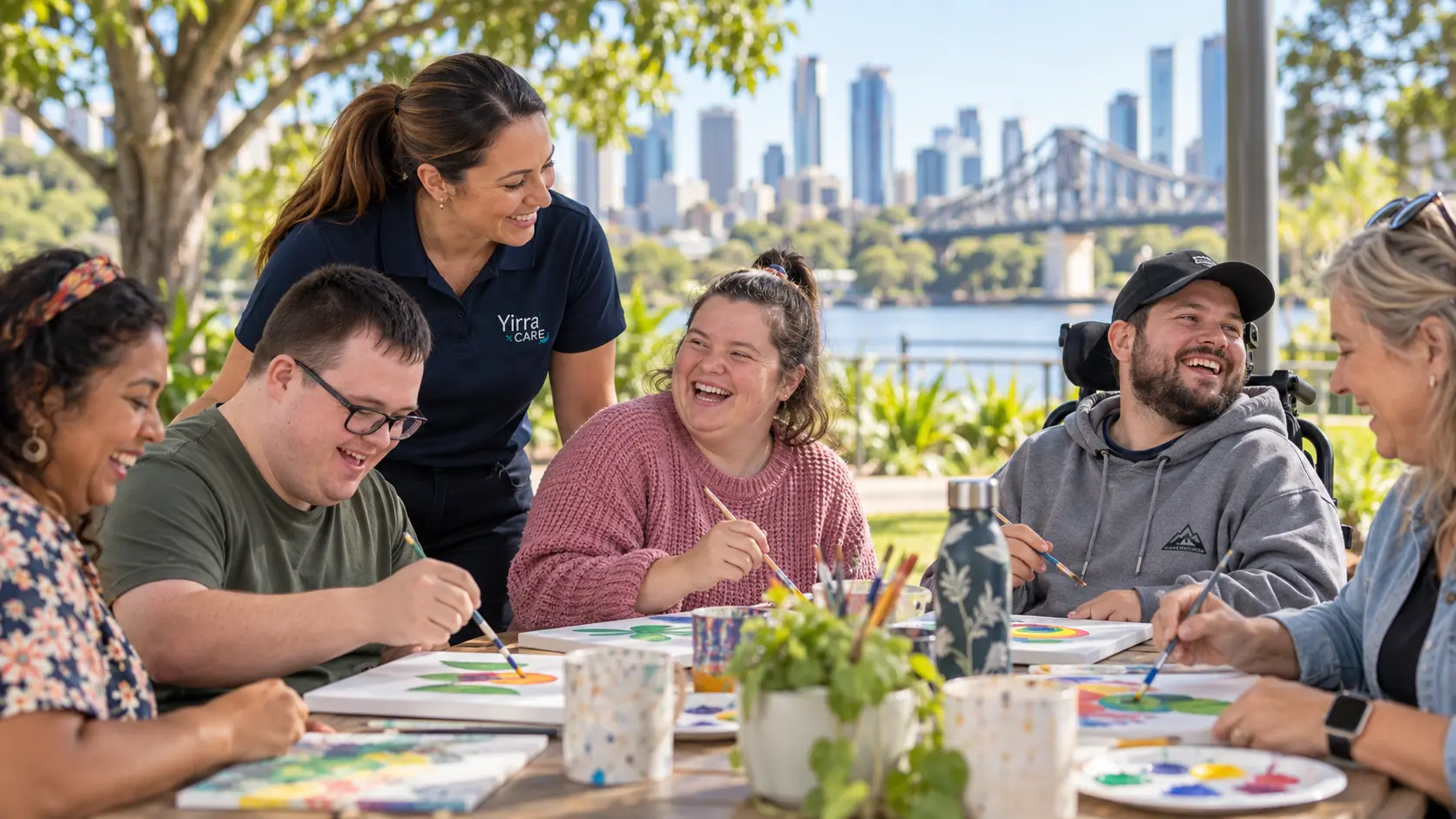
Creative activities can provide a shared focus without requiring constant conversation.
Examples may include:
- painting
- pottery
- craft
- photography
- music
- drumming
- dance
- cooking
- baking
- gardening.
A shared task can make social interaction feel more natural. Participants can contribute at their own pace while developing practical or creative skills.
Sport and movement
Group movement activities might include:
- swimming
- walking
- bowling
- basketball
- adaptive sport
- dance
- yoga
- outdoor recreation.
The activity should suit the participant’s mobility, communication, sensory needs and personal preferences.
Accessibility should always be checked before booking.
Social and interest-based groups
Not everyone wants a formal skills programme.
Some participants may prefer groups built around shared interests, such as:
- gaming
- movies
- books
- technology
- animals
- music
- cafés
- local events
- board games.
Shared interests can make it easier to begin conversations because people already have something in common.
Community experiences and outings
Group participation can also happen outside a centre.
Possible experiences include:
- museums
- libraries
- markets
- parks
- community festivals
- gardens
- cafés
- accessible attractions
- local events.
The NDIA’s social and community participation guidance recognises that participation can happen across everyday community settings rather than only within formal programmes.
For more Brisbane-specific ideas, see Yirra Care’s guide to social activities for people with disabilities in Brisbane.
How Can NDIS Group Activities Support Participant Goals?
Joining a group should not mean placing everyone into the same programme and expecting the same outcome.
One participant may want to make friends.
Another may want to practise communication.
Someone else may be working towards using public transport, making decisions independently or becoming comfortable in unfamiliar environments.
Building social connection
Regular participation can create opportunities to meet people with similar interests.
Importantly, friendship should not be treated as an immediate performance target.
A first step might simply be attending the activity.
Later, the participant may become comfortable recognising familiar people, joining a conversation or completing a shared task.
The NDIA’s research on social inclusion found that community participation can contribute to belonging, connection, broader social networks and greater confidence.
Developing practical skills
A group can also provide a real-world setting for practising everyday skills.
A cooking activity might involve:
- following instructions
- preparing ingredients
- making choices
- working with others
- cleaning afterwards.
A community outing might involve:
- planning
- managing time
- ordering food
- handling money
- navigating public places
- communicating preferences.
Therefore, the activity itself can become a practical environment for working towards personal goals.
Building confidence and independence
Confidence often develops through repeated experience.
Someone who initially needs close support may gradually become familiar with the venue, people and routine.
Over time, the participant may need fewer prompts or feel more comfortable making decisions independently.
NDIA guidance specifically encourages participants to consider what they enjoy, what their goals are, what support they need and what activities exist in their local area.
Trying new interests
Sometimes the goal is simply discovering what someone enjoys.
Not every activity will be a good fit.
Trying a small art session, sporting activity or hobby group can help a participant understand what environments and activities work for them.
Enjoyment matters.
An activity that looks impressive on a support plan has limited value if the participant does not want to attend.
Yirra Care also provides information about Collective Sessions for people exploring structured group experiences.
Looking for community participation that connects with real goals?
Explore Community Participation Support
Can NDIS Funding Be Used for Group Activities?
This is where families need to be particularly careful.
Having an NDIS plan does not mean every class, group, ticket, membership or recreational activity is automatically funded.
Generally, NDIS social and recreation support focuses on the additional assistance a participant needs because of their disability.
Current NDIS guidance states that participants ordinarily pay general activity costs that everyone would pay, such as entrance fees, membership fees or basic equipment. The NDIS may then fund eligible disability-related support needed to participate.
Support cost versus activity cost
Consider this example.
A participant wants to attend a community art class.
The ordinary class fee may be a personal expense.
However, if the participant needs a support worker because of their disability to attend, communicate, use equipment or participate safely, that disability-related support may potentially be funded where it meets the relevant NDIS requirements.
That is very different from saying:
“Art classes are funded by the NDIS.”
The funding question is individual.
Which NDIS budgets may relate to community participation?
Depending on the participant’s plan, social and community participation supports may sit within different budget areas.
For example, current NDIS information describes Increased Social and Community Participation as Capacity Building funding that can help participants find and join activities, community groups, hobbies, sport or outdoor recreation.
Core supports may also be relevant to disability-related assistance for social and recreational participation, depending on the plan and circumstances.
However, the exact funding available must be checked against the participant’s current plan and NDIS rules.
Important NDIS update for late 2026
This area is changing.
New NDIS legislation passed Parliament on 19 August 2026. The NDIA states that participants can currently continue using their plans and supports as usual, while changes to social and community participation funding are expected to begin phasing in from October 2026.
The Government is also consulting on future market reforms for social and community participation and capacity-building activities.
Therefore, participants and families should check current guidance before committing to an activity based on an assumption about funding.
Never assume an activity is covered
Before booking, clarify:
- What part of the cost is the ordinary activity fee?
- What disability-related support is required?
- Is that support included in the participant’s plan?
- Does the support relate to the participant’s disability and goals?
- Are there additional transport, entry, equipment or material costs?
- Who is responsible for each cost?
This prevents unpleasant surprises later.
How to Choose Group Activities NDIS Participants in Brisbane Can Enjoy
Searching for group activities NDIS Brisbane options can produce hundreds of results.
That does not mean every result is suitable.
The best activity should fit the person, rather than expecting the person to fit the programme.
Start with interests rather than disability
Ask:
- What does the participant already enjoy?
- What topics do they talk about?
- Do they prefer active or quiet settings?
- Do they enjoy structured activities or flexibility?
- Would they prefer indoors or outdoors?
- Do they want to learn something or simply socialise?
Interest creates a natural reason to participate.
Check group size
A large group can be energising for one person and overwhelming for another.
Before joining, ask how many participants usually attend.
Also consider whether support is:
- individual
- shared
- delivered at a particular participant-to-worker ratio.
For group-based supports, current NDIS provider record-keeping requirements include documenting the activity, participants, staff and participant-to-staff ratio.
Check physical accessibility
Consider:
- wheelchair access
- accessible toilets
- seating
- parking
- drop-off areas
- public transport
- distance between spaces
- terrain
- emergency exits.
Do not rely only on the word “accessible”.
Ask what accessibility actually looks like at the venue.
Think about sensory needs
Noise, lighting, crowds and unpredictable activity can influence whether a group feels comfortable.
Questions may include:
- Is there a quieter area?
- Can the participant take breaks?
- Is music loud?
- How crowded is the venue?
- Are activities predictable?
- Can the participant arrive gradually or leave early?
The environment can be just as important as the activity.
Review communication support
A participant may communicate through speech, gestures, behaviour, pictures, AAC or another communication method.
Staff should understand how the person communicates choices, discomfort and consent.
Support should not mean forcing someone to participate.
Consider transport before committing
An ideal activity can quickly become impractical if transport is unreliable or exhausting.
Check:
- how the participant will get there
- travel time
- whether a worker will accompany them
- pick-up arrangements
- transport costs
- whether travel fits available supports.
Try before making a long commitment
Where possible, begin with a trial session or shorter commitment.
Afterwards, ask simple questions:
Did the participant enjoy it?
Was the support appropriate?
Was the environment comfortable?
Would they go again?
Those answers are more useful than choosing a programme solely because it appears suitable on paper.
Participants looking for broader local recreation ideas can also explore Yirra Care’s inclusive recreational programs in Brisbane.
How Can a Support Worker Help With Group Participation?
A support worker’s role should depend on what the participant actually needs.
For one participant, that could involve transport and getting settled.
Another person may need communication assistance, mobility support or help following instructions.
Someone else may need reassurance when entering an unfamiliar social setting.
Support can potentially include:
- preparing for the activity
- travelling to and from the venue
- navigating an unfamiliar environment
- communicating with facilitators
- personal care where appropriate
- using accessible or adapted equipment
- understanding instructions
- managing transitions
- taking breaks
- supporting safe participation.
However, the worker should not automatically take over.
Support should encourage choice
A participant should be able to decide:
- whether they want to attend
- what they want to do
- who they interact with
- when they need a break
- whether they want to return.
Good support creates opportunities for participation without turning the activity into a compulsory programme.
Support can change over time
A participant may initially need more assistance.
As familiarity grows, the worker may reduce prompts where appropriate.
For example:
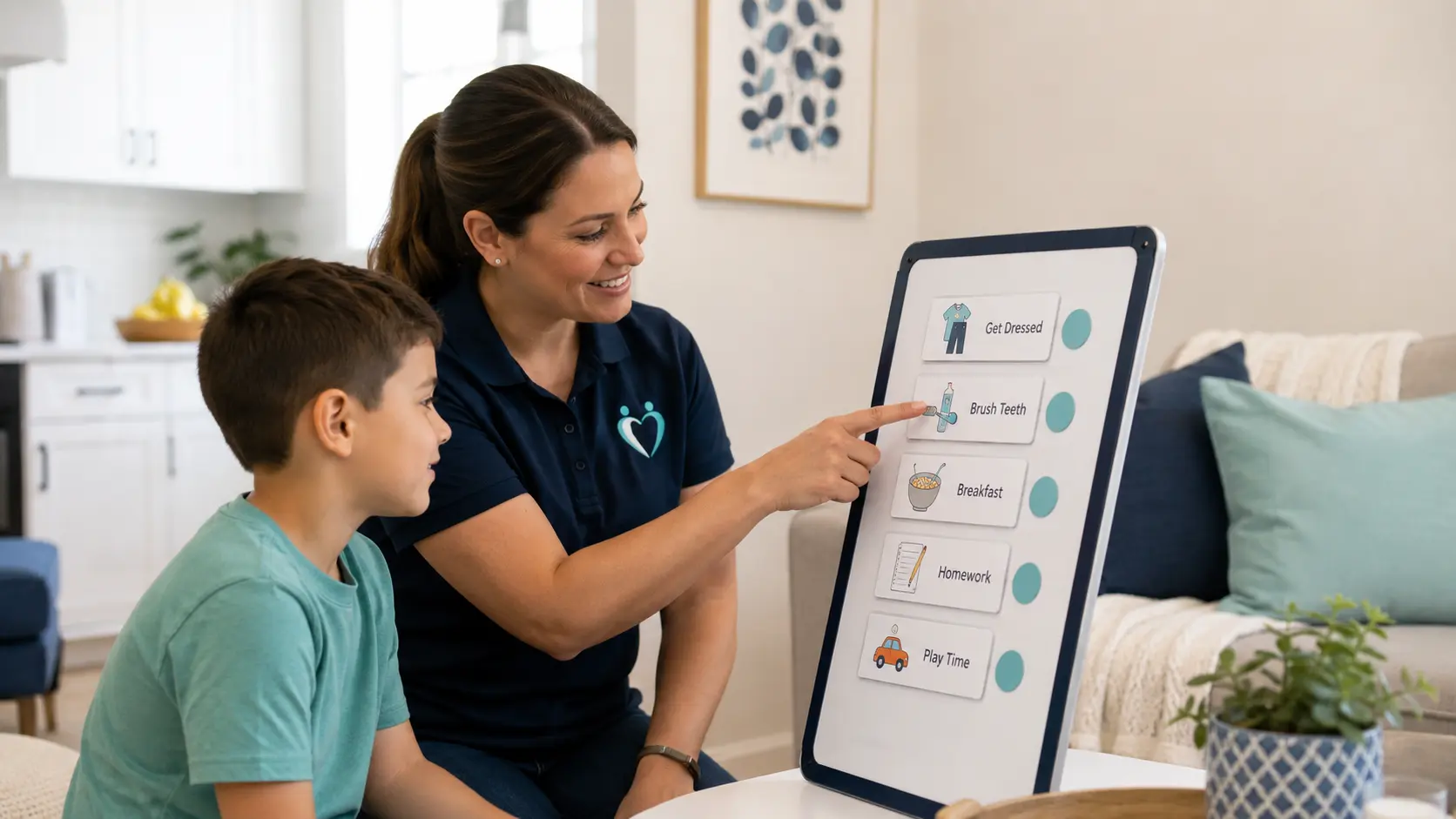
First sessions: worker helps navigate the venue and introduces the routine.
Later sessions: participant recognises the venue and chooses where to begin.
Over time: assistance focuses only on specific areas where disability-related support remains necessary.
The aim should reflect the participant’s own goals and preferences.
Yirra Care’s NDIS Community Access in Brisbane service information explains how community support can be shaped around interests, routines, communication needs and participation goals.
Want support to participate in the community with greater confidence?
Request Community Access Support
FAQs About NDIS Group Activities
What are NDIS group activities?
NDIS group activities are group-based social, recreational, community or skill-building experiences that participants may access with appropriate disability-related support. Examples can include art, cooking, sport, music, hobbies, outdoor recreation and community outings.
Does the NDIS pay for group activities?
Not automatically. The NDIS may fund eligible disability-related support required to participate. General costs that everyone would normally pay, such as many entrance, membership or standard activity fees, are generally the participant’s responsibility.
Can a support worker attend a group activity?
Potentially, yes. Where a participant requires disability-related assistance and the support is appropriate under their plan, a support worker may help them participate in social and recreational activities.
Do NDIS group activities have to happen at a centre?
No. Social and community participation can occur in mainstream community environments such as clubs, classes, sports, volunteering, outdoor activities and other local settings.
What are some examples of group activities for NDIS participants?
Examples may include cooking, art, craft, music, dance, gaming, gardening, sport, community outings, volunteering and interest-based groups. The best activity depends on the participant’s preferences, goals and support requirements.
How do I choose the right group activity in Brisbane?
Start with the participant’s interests. Then check accessibility, location, transport, group size, staff support, sensory environment, communication needs and costs before committing.
Can group activities help with social skills?
They can provide opportunities to practise communication, shared activities and interaction with other people. However, the outcome will differ between participants, and activities should not be presented as clinical treatment.
Are NDIS rules for social and community participation changing?
Yes. New NDIS legislation passed in August 2026, and the NDIA says changes affecting social and community participation funding will begin phasing in from October 2026. Participants should check current NDIS guidance when making funding decisions.
Making NDIS Group Activities Meaningful
The strongest NDIS group activities are not necessarily the biggest, busiest or most specialised programmes.
They are activities the participant actually wants to attend.
Start with interest. Then consider the participant’s goals, environment, accessibility, support requirements and costs.
A small weekly activity that feels comfortable and meaningful may create more value than a programme chosen only because it appears impressive.
Most importantly, community participation should support choice rather than pressure.
For Brisbane participants who need disability-related assistance to access social, recreational or group activities, Yirra Care can discuss appropriate community access support based on the participant’s goals and circumstances.
Funding remains subject to the participant’s individual plan and current NDIS requirements.
Ready to explore meaningful community participation?