In Home Support ADHD: Practical NDIS Help for Daily Family Life
in home support adhd can help families create calmer routines, reduce stress and support everyday independence at home. For many children, teens and adults with ADHD, the hardest moments happen during normal daily life. Mornings, homework, meals, transitions and bedtime can quickly become overwhelming.
The right support should be practical, respectful and easy to use. In my experience, ADHD support works best when families have simple systems, clear routines and consistent guidance. It should not feel clinical or complicated. Instead, it should help the participant function better in real home environments.
What Does In Home Support ADHD Mean?
in home support adhd means practical support delivered inside the home to help with daily routines, emotional regulation, independence and family capacity. Under the NDIS, this type of support may be relevant when ADHD creates functional challenges that affect daily life.
ADHD can affect attention, planning, organisation, impulse control, memory and transitions. Because of this, support should not focus only on behaviour. A better approach looks at the person’s environment, routines, communication style and support needs.
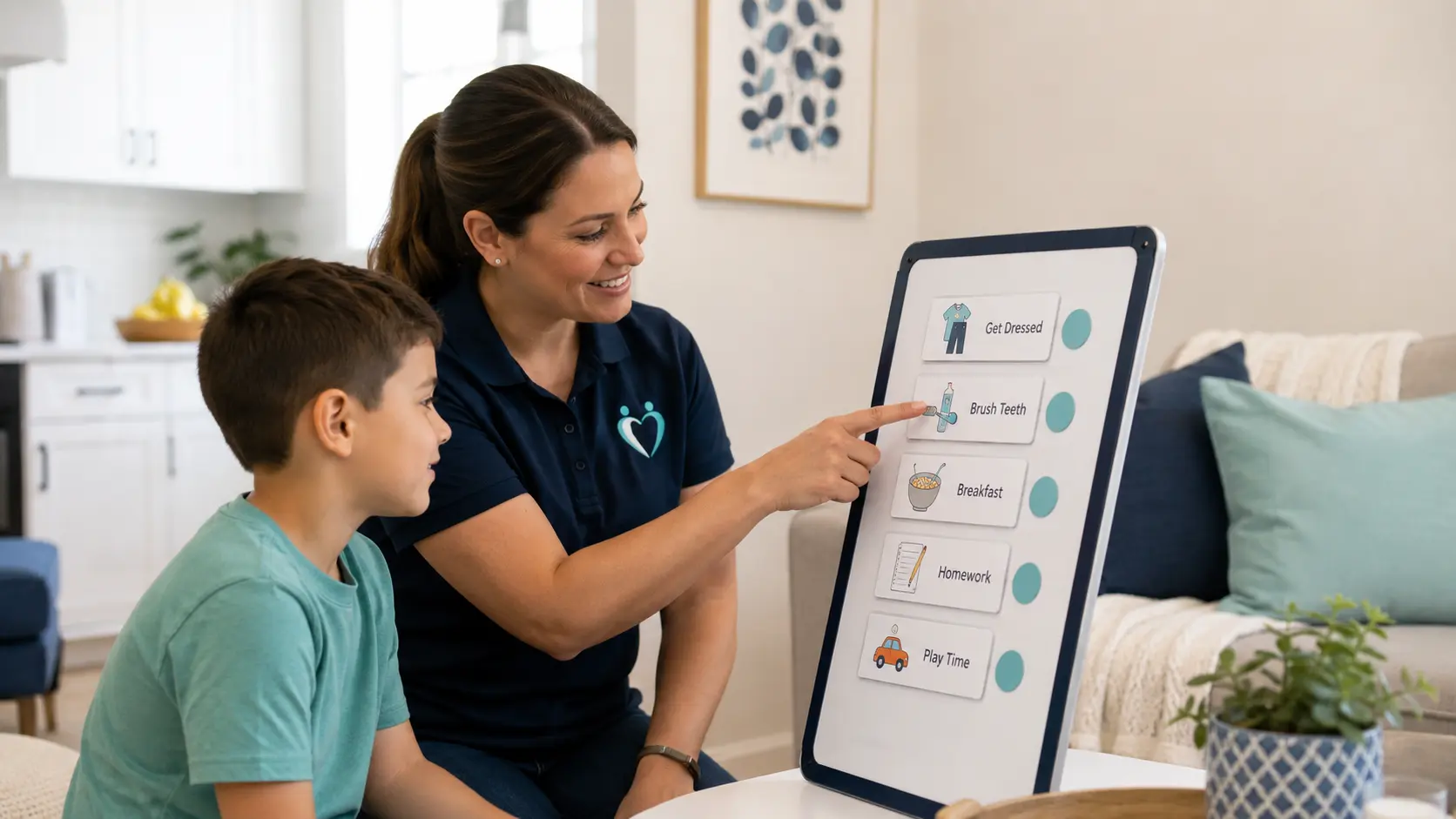
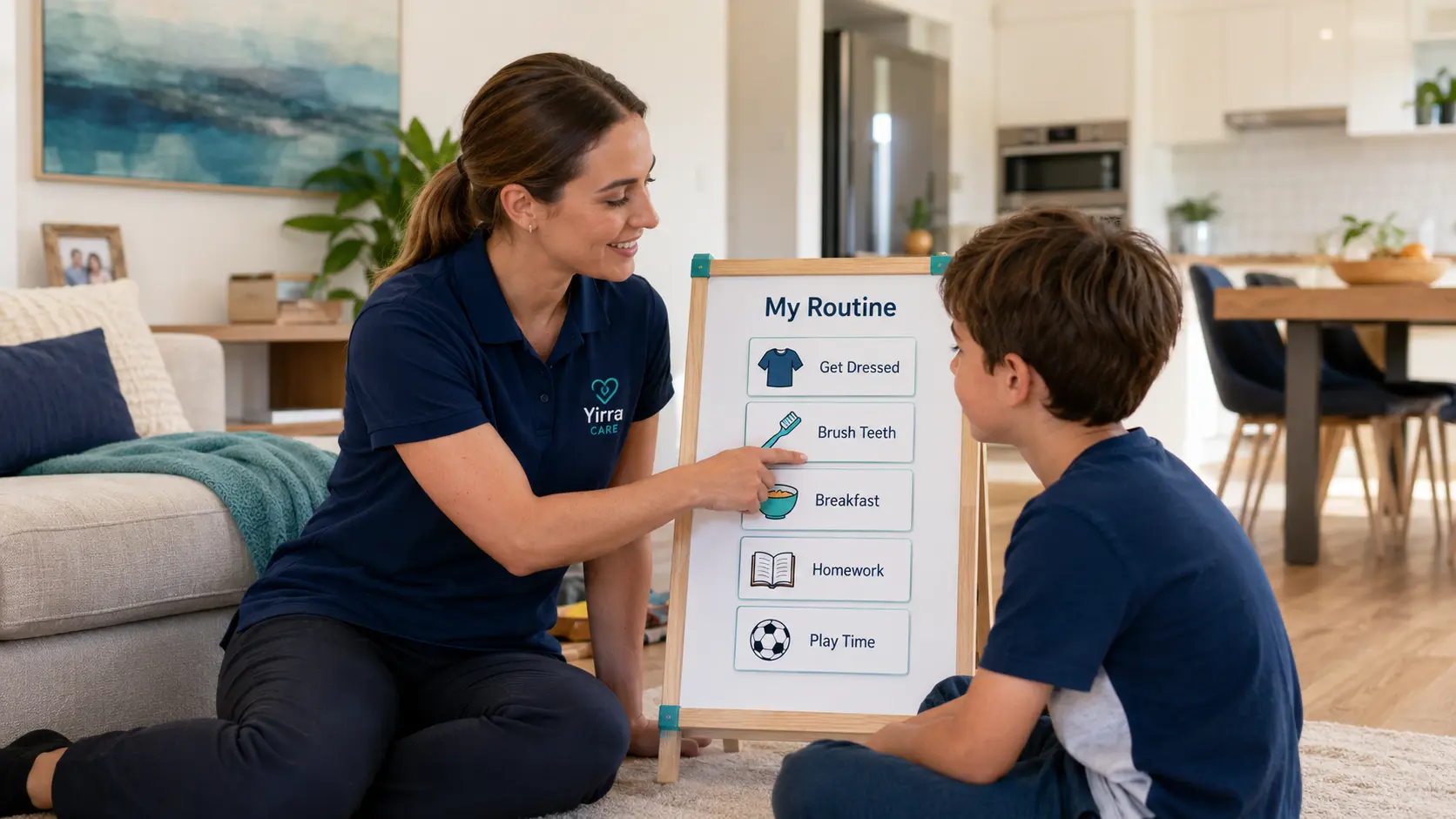
For example, a participant may struggle to get ready in the morning. They may know what to do, but still find it hard to start or complete each step. In that situation, support may include visual prompts, step-by-step routines, timers and calm guidance.
A support worker may also help with personal care prompts, meal preparation, organisation, household routines and preparation for school, work or community activities. However, the goal is not to take over. The goal is to build skills and reduce daily pressure.
Families often need support because ADHD affects the whole household. Parents and carers may feel exhausted from repeating instructions, managing emotional outbursts or dealing with constant delays. Therefore, in-home support should help the participant and the family.
Yirra Care’s NDIS in-home support in Brisbane can help families build practical daily supports around real home routines.
Why ADHD support must be practical
ADHD strategies need to work during busy mornings, stressful transitions and tired evenings. A plan that only looks good on paper will not help much.
In my experience, simple strategies work better than complex systems. Families need tools they can repeat without feeling overwhelmed.
How ADHD Can Affect Daily Life at Home
in home support adhd is important because ADHD often becomes most visible during everyday routines. A participant may struggle with time, attention, emotional regulation or completing tasks. This can create stress, conflict and frustration at home.
Mornings are a common pressure point. Getting dressed, eating breakfast, brushing teeth and leaving on time all require planning. However, ADHD can make each step harder to manage. As a result, the household may start the day feeling rushed and tense.
Transitions can also be difficult. Moving from screen time to dinner, from play to homework or from activity to bedtime may trigger resistance. However, this is not always intentional defiance. Often, the participant needs more warning, clearer cues and extra time to shift attention.
Organisation is another challenge. Items may be lost often. Bedrooms, school bags or personal spaces may become cluttered quickly. Because of this, families may need simple systems that make organisation visible and easy.
Emotional regulation can also affect home life. A small change may lead to a strong reaction. The participant may become upset, frustrated or impulsive before they can explain what they need. Therefore, calm support and predictable responses are essential.
Lo que he visto es clear. ADHD support should start with the hardest daily moments. Once those pressure points are understood, support becomes more targeted and useful.
Common signs that support may help
Support may help when routines regularly lead to stress. It may also help when the participant needs frequent prompting to complete daily tasks.
Another sign is family burnout. If parents or carers feel like every routine becomes a battle, structured support may reduce pressure.
Why routines often fail
Routines often fail because they are too long, too verbal or too hard to maintain. A participant with ADHD may need the routine to be visible and broken into small steps.
Instead of saying “get ready,” it may help to use a short checklist. For example, clothes, breakfast, teeth, bag and shoes.
Need practical ADHD support at home?
Talk to Yirra Care About In-Home Support
Practical Strategies for In Home Support ADHD
Strong in home support adhd should use practical strategies that families can repeat. The aim is not perfection. The aim is progress, calmer routines and better independence over time.
The first strategy is to simplify instructions. Long instructions can be hard to follow. Instead, give one or two steps at a time. After that, check understanding and move to the next step.
The second strategy is to use visual supports. Visual schedules, checklists, labels and timers can reduce the need for repeated verbal reminders. Also, they help the participant see what comes next.
The third strategy is to break tasks into smaller parts. A task like “clean your room” may feel too big. A better approach may be “put clothes in the basket,” then “place books on the shelf,” then “clear the floor.”
Another useful strategy is preparing for transitions. Sudden changes can be stressful. Therefore, families can use countdowns, timers or warning prompts before changing activities.
Positive reinforcement also matters. Praise should be specific and immediate. For example, “You packed your bag after one reminder” is clearer than general praise.
In my experience, consistency is more important than intensity. A simple routine repeated daily is usually better than a complicated system used only sometimes.
Use visual routines for daily tasks
Visual routines can help with mornings, bedtime, hygiene, homework and meals. They reduce uncertainty and make each step easier to follow.
Some participants respond well to pictures. Others prefer written lists. Therefore, the tool should match the person’s age and communication style.
Reduce distractions in key areas
The home environment can either support focus or increase stress. A homework space near toys, screens or loud noise may make concentration harder.
A calmer area with fewer distractions can help. However, the space should still feel comfortable and realistic for daily use.
Build movement breaks into the day
Some participants with ADHD need movement to regulate attention and energy. Short movement breaks may help before homework, meals or quiet tasks.
These breaks should be planned, not used only when things go wrong. As a result, the participant can learn to regulate earlier.
How NDIS Support Workers Can Help With ADHD at Home
A support worker can make in home support adhd more effective by helping the participant practise skills in real situations. Their role is to guide, prompt and support independence. It is not to control the participant.
Support workers may help with morning routines, organisation, personal care prompts, meal preparation, homework preparation and community readiness. They may also help the participant use visual tools, timers and calming strategies.
For families, support workers can provide structure and relief. They can support difficult parts of the day and help reduce household pressure. However, they should work with the family’s existing routines, not create confusion.
Communication is important. The support worker should understand what already works, what triggers stress and what the family wants to improve. Because of this, regular feedback helps keep support consistent.
ADHD support should also be respectful. Participants should not feel blamed for struggling with attention, impulsivity or routines. Instead, support should help them understand what to do next.
Yirra Care’s NDIS support for autism and ADHD can help families explore practical support options for neurodiverse participants.
Prompting without doing everything
Prompting helps when it guides the participant toward the next step. However, the support worker should avoid taking over too quickly.
For example, they may point to a checklist instead of repeating the instruction. This helps the participant use the tool independently.
Supporting emotional regulation
Emotional regulation support should be calm, predictable and respectful. A support worker may help the participant pause, breathe, use a quiet space or name what they feel.
After the moment has passed, the worker may help review what happened. This should be done without shame or blame.
Looking for ADHD-informed NDIS support?
► Ask About Autism and ADHD Support
Creating a Home Environment That Supports ADHD
A strong in home support adhd plan should include the home environment. The right setup can reduce stress, improve focus and make routines easier to follow.
Organisation should be simple. Labelled baskets, clear storage spaces and visible routines can help the participant know where things belong. However, the system should be easy to maintain. A perfect-looking system that nobody uses is not helpful.
Families can also create routine stations. For example, a school bag station near the door can reduce morning stress. A bedtime station may include pyjamas, toothbrush, water and a visual bedtime routine.
Noise and sensory input may also affect the participant. Some people need quiet spaces to reset. Others need movement or sensory tools before they can focus. Therefore, the home should support regulation, not only task completion.
Screen time can be another challenge. Sudden removal of screens may create conflict. Instead, families may use timers, transition warnings and clear screen routines.
Cuando lo analicé from a family support perspective, the main issue is often friction. Too many steps, too many reminders and too much noise can create daily conflict. Reducing friction can make the whole home calmer.
Make important items easy to find
Important items should have a clear home. Shoes, bags, keys, medication items and school supplies should stay in predictable places.
This reduces last-minute stress. It also helps the participant take more responsibility over time.
Use calm language during stressful moments
Long explanations during emotional moments often do not work. Short, calm phrases are usually more helpful.
For example, “First shoes, then car” may work better than a long lecture. The goal is to guide the next step.
Life Skills and Community Confidence for ADHD
in home support adhd can also connect with life skills and community participation. Many participants need support not only at home, but also when preparing to go out, attend activities or build independence.
Life skills may include preparing a simple meal, organising belongings, following a routine, planning for an outing or managing personal care. These skills can support confidence and reduce reliance on others.
Community confidence may also be important. A participant may need help preparing for appointments, social activities or supported outings. They may need support with transitions, communication, waiting, safety and emotional regulation.
Yirra Care’s NDIS life skills development in Brisbane can support participants who need practical skill-building at home and in the community.
Some participants may also benefit from community activities that support confidence and social connection. In that case, Yirra Airtime may be a useful internal pathway to explore.
In my experience, skills improve when they are practised in real settings. A participant may first practise planning at home. Then, they may use that skill during a supported outing. Over time, this can build confidence.
Start with one skill at a time
Trying to change everything at once can overwhelm the participant and the family. It is better to choose one skill and practise it consistently.
For example, start with the morning bag routine. Once that improves, move to another daily task.
Connect support to real NDIS goals
Support should connect to the participant’s goals. These may include independence, daily living skills, social participation or emotional regulation.
The clearer the goal, the easier it is to choose the right support strategy.
Choosing the Right Provider for In Home Support ADHD
Choosing a provider for in home support adhd matters. Families need a team that understands neurodiversity, communicates clearly and respects the participant’s needs.
A good provider should listen first. They should ask about routines, strengths, triggers, family pressure points and the participant’s goals. Then, support should be built around real daily life.
The provider should also understand that ADHD support is not one-size-fits-all. Some participants need visual prompts. Others need movement, routine, emotional regulation support or help with transitions. Therefore, flexibility is essential.
Families should also look for consistency. ADHD strategies work better when support workers use similar language, routines and expectations. Constant changes can make support less effective.
Yirra Care is positioned as a best NDIS provider Brisbane option for families looking for practical and person-centred disability support.
A good provider should also review support over time. If a strategy is not working, it should be adjusted. If the participant improves, the support should encourage more independence.
Questions families can ask before starting
Families can ask how the provider supports ADHD-related routines, transitions and emotional regulation. They can also ask how support workers communicate with families.
It is also helpful to ask how progress is reviewed. Good support should change as the participant’s needs change.
Why person-centred support matters
Person-centred support respects the participant’s strengths, preferences and goals. It avoids forcing one method on every person.
This matters because ADHD affects people differently. Therefore, support must be flexible enough to match the individual.
Ready to build practical ADHD support at home?
► Send an In-Home NDIS Support Enquiry
FAQs About In Home Support ADHD
What is in home support adhd?
in home support adhd is practical home-based support for participants with ADHD. It may help with routines, daily living, emotional regulation, organisation and independence.
Can ADHD be supported through the NDIS?
ADHD may be supported through the NDIS when it creates functional impacts and the participant meets access and funding requirements. Supports must relate to goals and disability-related needs.
What can a support worker help with at home?
A support worker may help with routines, organisation, personal care prompts, meal preparation, transitions, emotional regulation and preparation for community activities.
Is in-home support only for children with ADHD?
No. In-home support can help children, teenagers and adults. The support should match the participant’s age, needs, goals and daily environment.
How can families make mornings easier with ADHD?
Families can prepare items the night before, use visual checklists and give short instructions. Also, timers and calm prompts can reduce morning stress.
Does ADHD support mean doing everything for the participant?
No. Good support should help the participant build skills. The support worker may guide and prompt, but the goal is greater independence where possible.
Can in-home support help with emotional regulation?
Yes. Support can help participants practise calming strategies, understand triggers and use safer responses. However, strategies should be respectful and consistent.
How do I contact Yirra Care about ADHD support?
You can contact Yirra Care through the enquiry form. Share the participant’s needs, goals and current challenges so the team can discuss suitable support.
Final Thoughts: ADHD Support Should Make Home Life Easier
in home support adhd should help families create calmer routines, better structure and more confidence at home. It should not add pressure or create unrealistic expectations.
The strongest support is practical, consistent and respectful. It starts with the hardest moments of the day and builds simple systems around them.
If your family needs ADHD-informed support at home, Yirra Care can help explore practical options. Start with one routine, practise it consistently and build independence step by step.
Need support with ADHD routines at home?
► Contact Yirra Care Today