Disability Social Groups Brisbane & NDIS Community Access
Finding the right disability social groups Brisbane participants can enjoy is about more than filling a calendar. The best activities usually connect with the person’s interests, communication style, confidence, support needs and the kinds of relationships or experiences they want to build.
For some people, that might mean a regular art group. For others, it could be bowling, gaming, cafés, music, sport, community events or simply spending time with people who share similar interests.
NDIS community participation support may help eligible participants take part when disability-related assistance is needed. However, the activity itself and the support required to participate are not always funded in the same way.
This guide explains how social groups can work, gives practical Brisbane activity ideas and outlines what participants, families and support coordinators should consider before joining.
What Are Disability Social Groups Brisbane?
Disability social groups Brisbane can include organised activities, community programs or informal shared experiences where people with disability spend time with others around common interests.
Some groups are disability-specific.
Others are ordinary community clubs, classes or activities where a participant may use disability support to take part.
Examples include:
- art and craft groups
- bowling
- gaming groups
- cooking activities
- music and karaoke
- walking groups
- fitness or recreation
- café outings
- community events
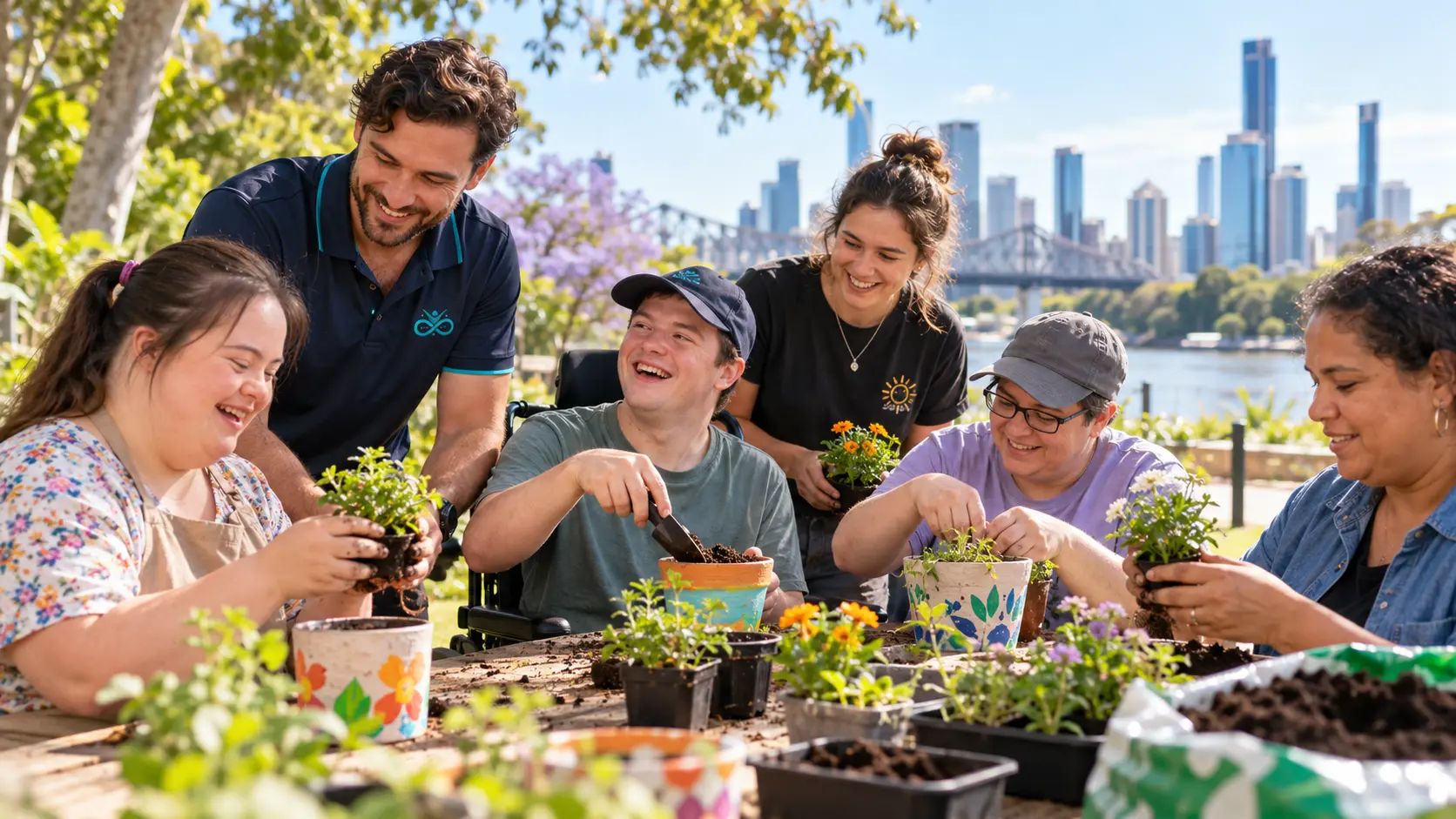
- gardening
- photography
- movies
- sport
- festivals
- social clubs.
Brisbane providers currently offer a wide range of models. Applied Abilities runs youth and adult group activities alongside one-to-one social and community support, while Swara’s Group Community Access program uses shared outings around Brisbane such as bowling, movies, mini golf and local attractions.
A social group should be more than somewhere to go
The activity is only one part of the experience.
A useful group may also provide opportunities to:
- meet people
- develop friendships
- practise communication
- build confidence
- make choices
- discover new interests
- become more comfortable in community environments.
Multicap’s current social-experience programs similarly centre on shared experiences such as dining, live sport, shows, karaoke and festivals, with an emphasis on connection and trying new things.
For participants looking for support to access community activities more broadly, Yirra Care’s NDIS Community Access in Brisbane service focuses on participation shaped around individual goals, interests and comfort.
Looking for support to participate in social activities in Brisbane?
Discuss Community Access Support
What Types of NDIS Activities Brisbane Participants Can Explore?
There is no single list of approved NDIS activities Brisbane participants must choose from.
The better question is:
What does the participant enjoy, and what disability-related support do they need to take part?
Creative activities
These might include:
- painting
- craft
- pottery
- photography
- music
- drama
- jewellery making
- creative writing.
Creative groups can suit participants who prefer structured activities where conversation develops naturally around a shared task.
Sport and recreation
Examples may include:
- bowling
- swimming
- walking
- gym activities
- mini golf
- adaptive sport
- dance or movement.
A participant does not need to be highly competitive.
For many people, recreation is primarily about enjoyment, routine and connection.
Gaming and shared-interest groups
Social groups can also form around:
- video games
- board games
- technology
- movies
- pop culture
- collecting
- specific hobbies.
Shared interests can make social interaction feel less forced because people already have something to talk about.
Community outings
Not every social experience needs to happen inside a program centre.
Examples include:
- cafés
- markets
- museums
- libraries
- South Bank
- community festivals
- sporting events
- local attractions.
Swara, for example, currently describes group community access through changing Brisbane outings designed to combine social connection with practical community skills.
Everyday community experiences
Social participation can also happen through ordinary life.
That may include:
- shopping with others
- meeting for coffee
- attending a regular club
- volunteering
- joining a class
- attending community events.
The goal does not have to be “join a disability group”.
It might simply be:
I want to meet people who enjoy the same things I do.
Why Social Groups Can Matter
People join groups for different reasons.
Some want friendships.
Others want more confidence being around people.
Some simply want something enjoyable to look forward to.
Building social connection
Groups can create repeated contact with the same people.
That matters because friendships often develop over time rather than through one-off introductions.
A regular weekly group may provide opportunities for participants to:
- recognise familiar faces
- learn names
- share experiences
- discover common interests
- become more comfortable initiating conversation.
Building confidence
Joining something new can feel difficult.
A participant may initially prefer:
- a smaller group
- a familiar worker
- shorter sessions
- predictable activities
- the same location each week.
Confidence may develop gradually.
Current NDIS participation guidance recognises that suitable social and community supports can help people build confidence, relationships and greater independence in community participation.
Trying new interests
Sometimes the participant does not yet know what they enjoy.
Trying different activities can help.
The NDIS’s own social and community participation guidance notes that interests can change over time and that trying new activities can help people discover what suits them.
How Can NDIS Community Participation Support Help?
NDIS social participation Brisbane support may help a participant where disability creates additional barriers to taking part in social or recreational activities.
Support might involve:
- helping plan an activity
- preparing before leaving home
- accompanying the participant
- communication support
- navigating unfamiliar environments
- assistance with public transport
- support interacting with other people
- managing accessibility requirements.
Official NDIS material describes assistance with social, economic and community participation as support or supervision that helps a participant take part in social and community life.
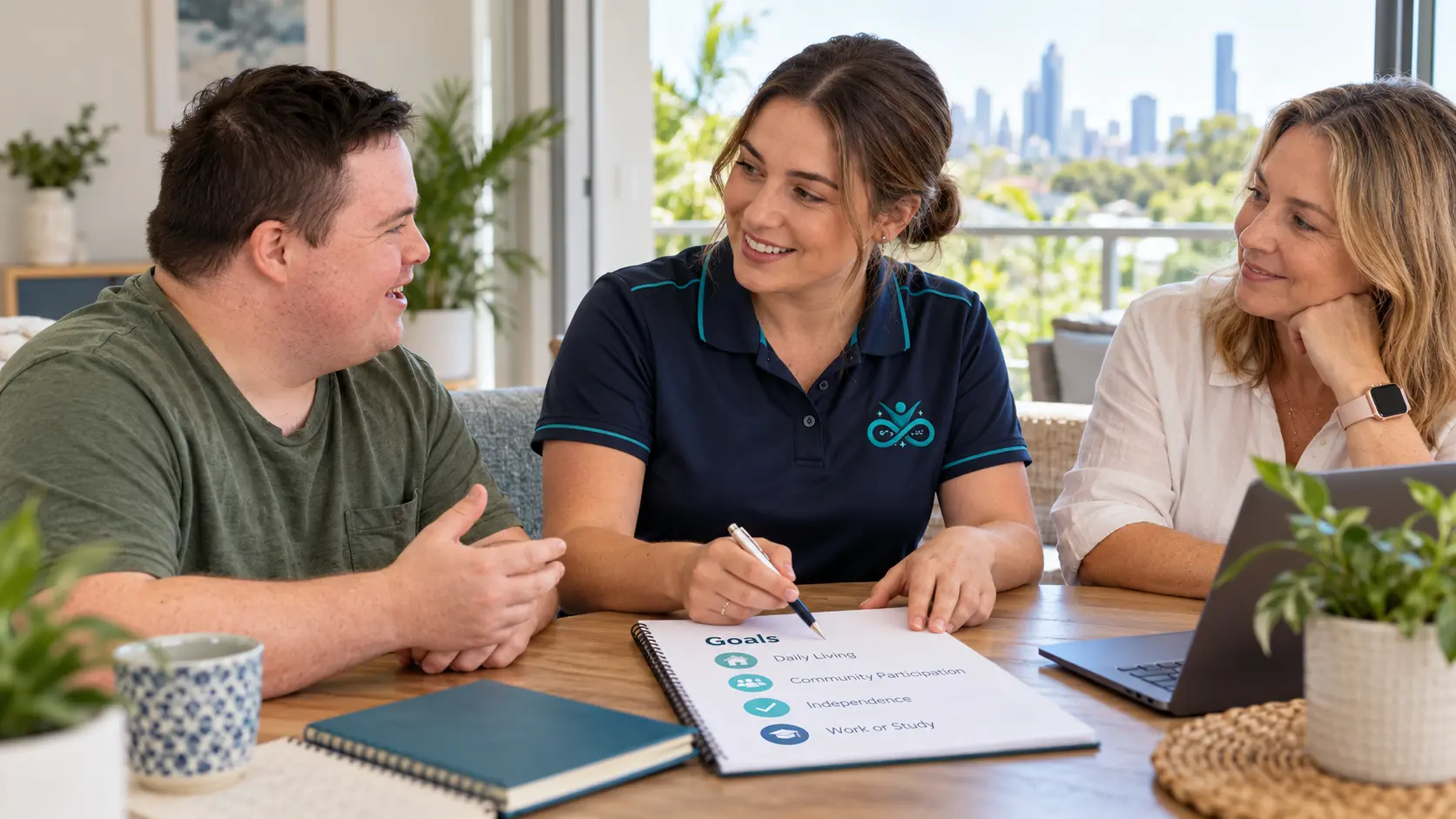
The support should follow the participant’s goals
A participant’s goal might be:
I want to meet more people.
Another might be:
I want to feel more confident participating in activities outside home.
A third might be:
I want to learn to use public transport so I can attend activities more independently.
The same activity could support different goals.
The important part is understanding why that activity matters to the participant.
For more background, see Yirra Care’s NDIS community participation guide.
Are NDIS Funded Activities Brisbane Really Fully Funded?
The phrase NDIS funded activities Brisbane is commonly searched, but it can create confusion.
The NDIS does not generally pay every cost simply because an activity supports a participant’s goals.
There is an important distinction between:
the normal cost of the activity
and
the additional disability-related support required to participate.
Current NDIS guidance says ordinary costs that everyone would normally pay, such as entry fees, registration fees, membership fees or standard equipment, are generally not funded. Disability-related assistance needed to participate may potentially be funded when it meets the relevant requirements.
Example: bowling group
A participant joins a bowling group.
The bowling fee may be an ordinary personal cost.
If the participant requires a support worker because of disability-related needs, that assistance may be treated separately depending on the participant’s current plan and funding.
Example: art class
A standard art-class fee would generally be an ordinary activity cost.
But a participant who requires additional disability-related assistance to attend and participate may have support needs considered separately.
Do not assume an activity is automatically NDIS-funded because a provider advertises it as an “NDIS activity”.
Always check the participant’s current plan.
Important NDIS Changes From October 2026
This article is scheduled for publication on 13 October 2026, shortly after changes to some NDIS support budgets began taking effect.
The NDIA announced that reductions to some budgets within Social Economic and Community Participation are being introduced progressively.
They apply as relevant plans are:
- created or reassessed from 1 October 2026
- renewed from 1 February 2027.
The NDIA also states that the effect will differ between participants because plans depend on individual circumstances, goals and support needs.
This does not mean every participant suddenly loses access to social or community support.
It means participants should avoid relying on old assumptions about funding and check their current plan when organising activities or supports.
Choosing Social Groups for People With Disability Brisbane
Finding a group should begin with the person rather than the program timetable.
Start with genuine interests
Ask:
- What do you already enjoy?
- What would you like to try?
- Do you prefer active or relaxed activities?
- Would you rather create something, play something or go somewhere?
- Are you interested in meeting people your own age?
- Would a shared-interest group make conversation easier?
A group is more likely to feel meaningful when the person actually likes the activity.
Think about group size
One participant may enjoy a room full of people.
Another may prefer four or five.
Ask providers:
- How many participants attend?
- How many staff are present?
- Is the group always the same size?
- Can someone try the group before committing?
Consider age and interests
A “disability group” is not automatically a good match.
A 19-year-old may not want the same activities as a 45-year-old.
Look for:
- similar ages
- shared interests
- compatible activity pace
- opportunities for genuine interaction.
Applied Abilities, for example, currently separates youth and adult group activities, which illustrates why age and life stage can matter when designing social programs.
Consider sensory needs
Ask about:
- noise
- crowds
- lighting
- waiting times
- travel
- busy venues
- available quiet spaces.
A popular activity is not useful if the environment makes participation overwhelming.
Check accessibility
Accessibility may involve more than wheelchair entry.
Consider:
- bathrooms
- seating
- transport
- walking distance
- communication access
- sensory environment
- mobility equipment
- support-worker access.
Disability Community Activities Brisbane: Group or Mainstream?
Participants do not have to choose only disability-specific programs.
Both disability-specific and mainstream groups can be useful.
Disability-specific groups
Possible benefits include:
- staff familiar with disability support
- accessible environments
- planned support ratios
- predictable structures
- participants with similar experiences.
Mainstream community groups
These may provide:
- broader community inclusion
- connection around shared interests rather than disability
- opportunities to build relationships in ordinary community settings
- a wider range of hobbies and experiences.
The right choice depends on the participant.
Some people use both.
How Can Social Groups Connect With NDIS Goals?
A social activity becomes more useful when you understand what the participant wants from it.
Goal: make friends
Possible options:
- gaming group
- regular art group
- bowling league
- shared-interest club
- recurring social outing.
Regular attendance may be more useful than constantly changing activities because it gives relationships time to develop.
Goal: build confidence
Possible options:
- small group outings
- structured weekly sessions
- familiar venues
- activities with clear routines.
Goal: develop communication
Possible opportunities include:
- ordering food
- planning activities
- taking turns
- discussing shared interests
- asking questions
- making choices with other group members.
Goal: become more independent
Community activities may create opportunities to practise:
- public transport
- budgeting
- planning
- time management
- navigating venues
- decision-making.
Care to Change’s current Brisbane community-participation model similarly combines groups, skill-building and one-to-one community access rather than treating social participation only as entertainment.
Want to explore activities that connect with the participant’s goals?
Talk to Yirra Care About Community Access
Questions to Ask Before Joining a Disability Social Group Brisbane
Before committing to a group, ask practical questions.
What activities do you run?
Ask for examples.
A vague answer such as “community participation” does not tell you what a normal week looks like.
How are activities chosen?
Are they:
- participant-led
- fixed by staff
- voted on by the group
- based on a program calendar?
Participant choice matters.
How big is the group?
Ask for typical numbers rather than maximum capacity.
How many support workers attend?
The right staffing arrangement depends on the participants and activity.
Can someone try the group first?
A trial or introductory activity may help the participant decide whether the environment feels right.
Are ordinary activity costs separate?
Ask specifically about:
- tickets
- meals
- entry fees
- memberships
- activity materials
- transport.
This is especially important because ordinary activity costs and disability support costs may be treated differently under NDIS rules.
What happens if the participant does not enjoy an activity?
People should be able to express preferences.
A group should not require someone to enjoy every activity simply because it is on the calendar.
Can support be adjusted?
Ask what happens if the participant:
- needs additional help
- wants to leave early
- finds the venue overwhelming
- wants to try something different.
Red Flags When Comparing Social Groups
Be cautious when a provider:
- promises that every activity is “fully NDIS funded”
- cannot explain which costs the participant pays
- gives no information about group size
- ignores accessibility or sensory requirements
- expects every participant to enjoy the same program
- discourages questions about support ratios
- pushes long commitments before the participant has tried the group
- cannot explain how activities connect with participant goals.
A good social program should make participation clearer, not more confusing.
Social Activities Are Not Only About Building Skills
NDIS content can sometimes make every activity sound like a training exercise.
That is not necessary.
People also participate because activities are:
- enjoyable
- interesting
- relaxing
- exciting
- social.
Having fun can be a perfectly valid reason to join a group.
The support conversation should focus on the disability-related assistance the participant needs to participate, while the participant should still be free to choose experiences because they enjoy them.
Yirra Care’s existing guide to social activities for people with disabilities in Brisbane provides additional ideas for local participation.
How Yirra Care Can Support Community Participation
Yirra Care’s NDIS Community Access in Brisbane service is designed around participant interests, goals, communication style and support needs.
Current service information includes support around:
- social and recreational activities
- community events
- cafés and outings
- clubs and hobbies
- skill development
- everyday community tasks
- confidence in shared public spaces.
The starting point is not choosing from a fixed social calendar.
It is understanding the participant.
From there, suitable community-support options can be discussed based on current availability, needs and funding arrangements.
Start a Community Access Enquiry
FAQs About Disability Social Groups Brisbane
What are disability social groups Brisbane?
Disability social groups Brisbane are organised or community-based activities where people with disability can participate socially, explore interests, meet others and enjoy shared experiences.
What types of social groups are available in Brisbane?
Examples include art, gaming, bowling, music, cooking, fitness, community outings, cafés, sport and hobby-based groups. Availability varies between providers and community organisations.
Are disability social groups funded by the NDIS?
The NDIS may fund eligible disability-related support needed to participate. Standard activity costs such as entry fees, memberships or ordinary equipment are generally paid by the participant.
Can NDIS funding pay for a support worker at a social activity?
Potentially, where disability-related support is required, aligns with the participant’s plan and meets current NDIS requirements. Funding should be checked before services begin.
Do I have to join a disability-specific group?
No. Participants may explore disability-specific programs or mainstream community groups depending on their interests, needs and goals.
Can social groups help with NDIS goals?
They can provide opportunities connected with goals such as social connection, confidence, communication, independence and community participation. The activity should be considered in the context of the individual participant.
What should I ask before joining a group?
Ask about activities, group size, staffing, accessibility, sensory environment, transport, ordinary activity costs, support costs and whether the participant can try the group first.
Are NDIS social participation budgets changing in 2026?
Some Social Economic and Community Participation budgets are being reduced progressively for plans created or reassessed from 1 October 2026 or renewed from 1 February 2027. The effect is individual, so participants should check their current plan.
Finding Disability Social Groups Brisbane That Feel Right
The best disability social groups Brisbane participants can join are not necessarily the busiest, biggest or most heavily advertised.
They are the ones that feel meaningful to the person.
Start with interests.
Look at the people and environment.
Ask about accessibility.
Understand the costs.
Consider whether the participant wants a disability-specific program, a mainstream community group or a mix of both.
Most importantly, give the participant space to decide whether they actually enjoy being there.
Community participation should create opportunities for connection, choice and experiences that matter to the individual.